
Home / Legacy & Freedom / Emperor Faustin Soulouque
Anperè Faustin Iye, pitit Tigwav
Emperor Faustin Soulouque
Born enslaved in Petit-Goâve in 1782, he became President of Haiti in 1847 and Emperor Faustin I from 1849 to 1859. This is his life, his empire, his court and his country, told without myth and without caricature.
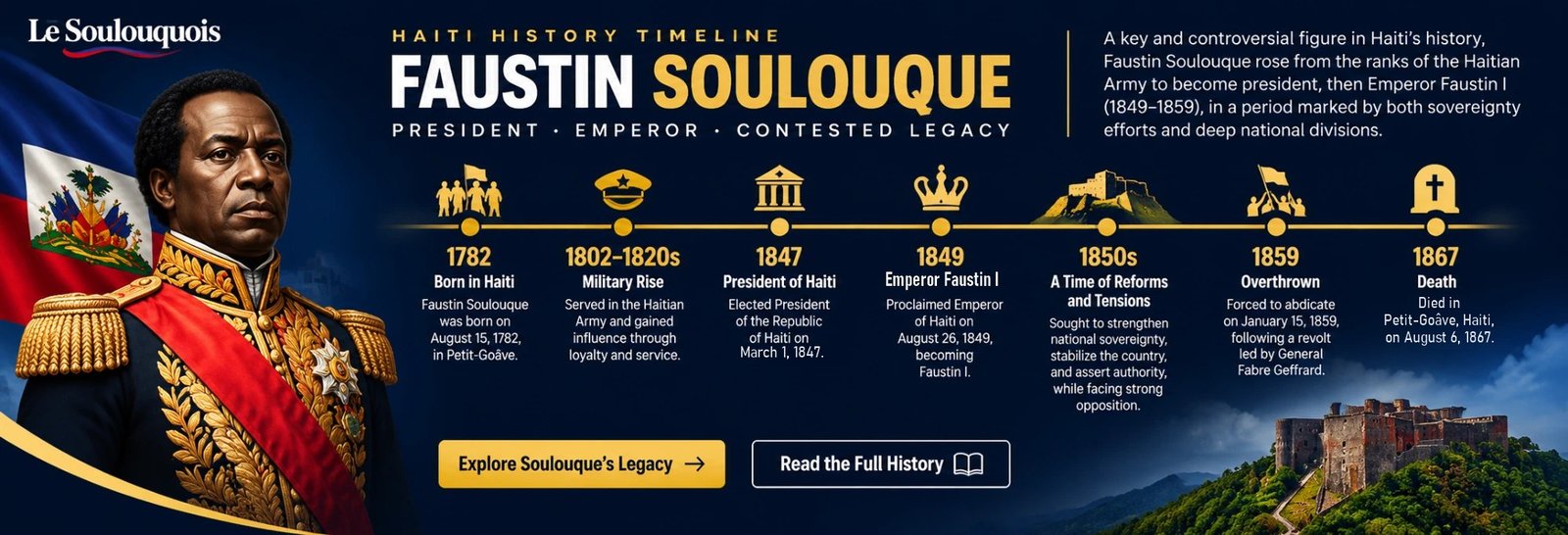
The emperor from Petit-Goâve
From slavery to the imperial throne
Few figures in Haitian history embody the contradictions of the nineteenth century as dramatically as Faustin-Élie Soulouque. He was born into slavery, fought for independence, served as a soldier for more than forty years, and then ruled Haiti for twelve years, first as president and then as emperor.
His reign brought national pride and imperial splendor, but also repression, costly wars and deep political division. He gave his name to the people of his hometown, the Soulouquois, and to this newsroom.

Chapter 1 · 1782–1804
Born enslaved in Saint-Domingue
Faustin-Élie Soulouque was born on August 15, 1782, in Petit-Goâve, in the French colony of Saint-Domingue. His mother, Marie-Catherine Soulouque, was a Creole woman of Mandinka descent. She lived to see her son on the throne and died in Port-au-Prince in 1857.
He was a child when the great uprising of 1791 began. The emancipation decree of 1793 freed him, and in 1803 he joined the army fighting Napoleon's troops. He was about twenty-one when Jean-Jacques Dessalines proclaimed independence on January 1, 1804.
Chapter 2 · 1804–1847
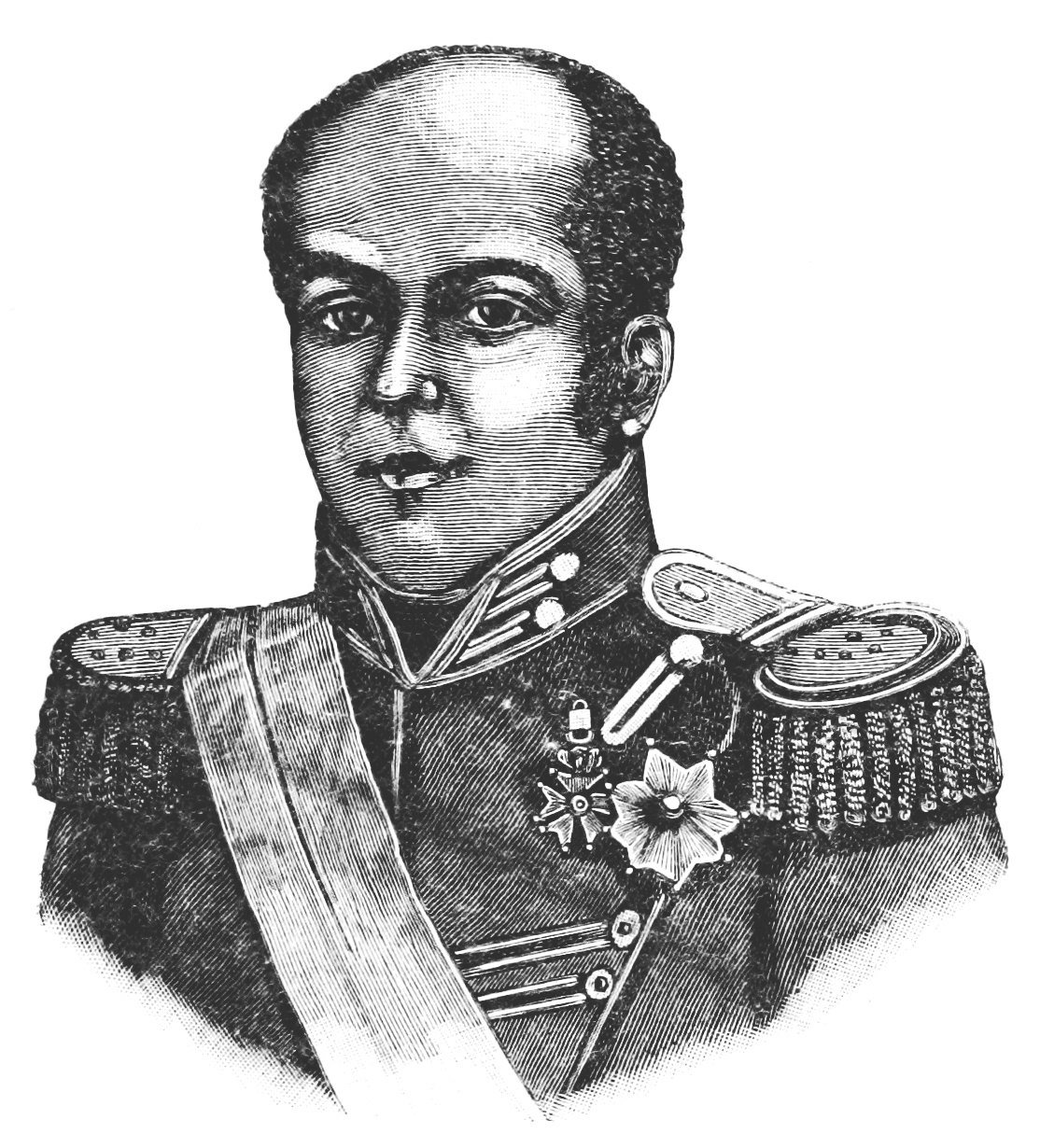
Forty years in uniform
After independence, Soulouque rose slowly through the ranks. He became a lieutenant and aide-de-camp to General Lamarre in 1806, joined the horse guard of President Alexandre Pétion in 1810, and kept serving under Jean-Pierre Boyer and the short-lived governments that followed.
He was a colonel under President Philippe Guerrier and, under Jean-Baptiste Riché, a lieutenant general and supreme commander of the presidential guard. He was known as a loyal, unassuming officer with no political ambitions of his own, which is exactly why the politicians of 1847 underestimated him.
Chapter 3 · 1847–1849
The president nobody expected
President Riché died in February 1847. Unable to agree on a strong candidate, the Senate chose Soulouque on March 1, 1847, and he took the oath the next day. The elite politicians who backed him expected a figurehead they could steer.
Instead, he took control. He replaced commanders, promoted loyal Black officers and broke with his sponsors. In April 1848 political violence in Port-au-Prince claimed many lives, most of them members of the mixed-race elite. Opponents were arrested, exiled or killed, and a feared militia, the Zinglins, enforced his rule.
Chapter 4 · 1849
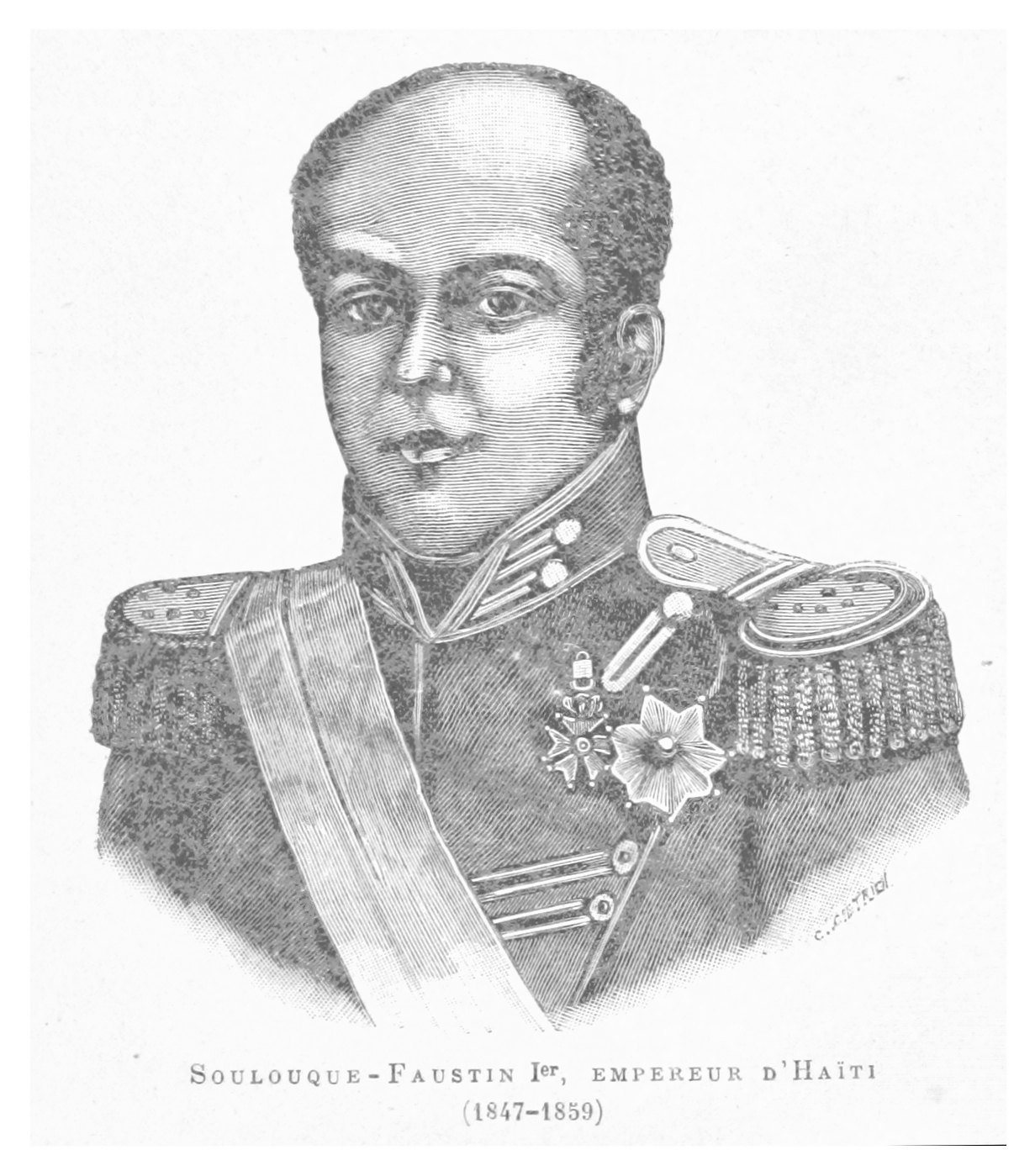
The Second Empire of Haiti
On August 26, 1849, the Senate and the Chamber of Deputies proclaimed Soulouque Emperor of Haiti under the name Faustin I. Haiti had known one emperor before him, Jean-Jacques Dessalines, who reigned as Jacques I from 1804 to 1806, so Soulouque's reign is called the Second Empire.
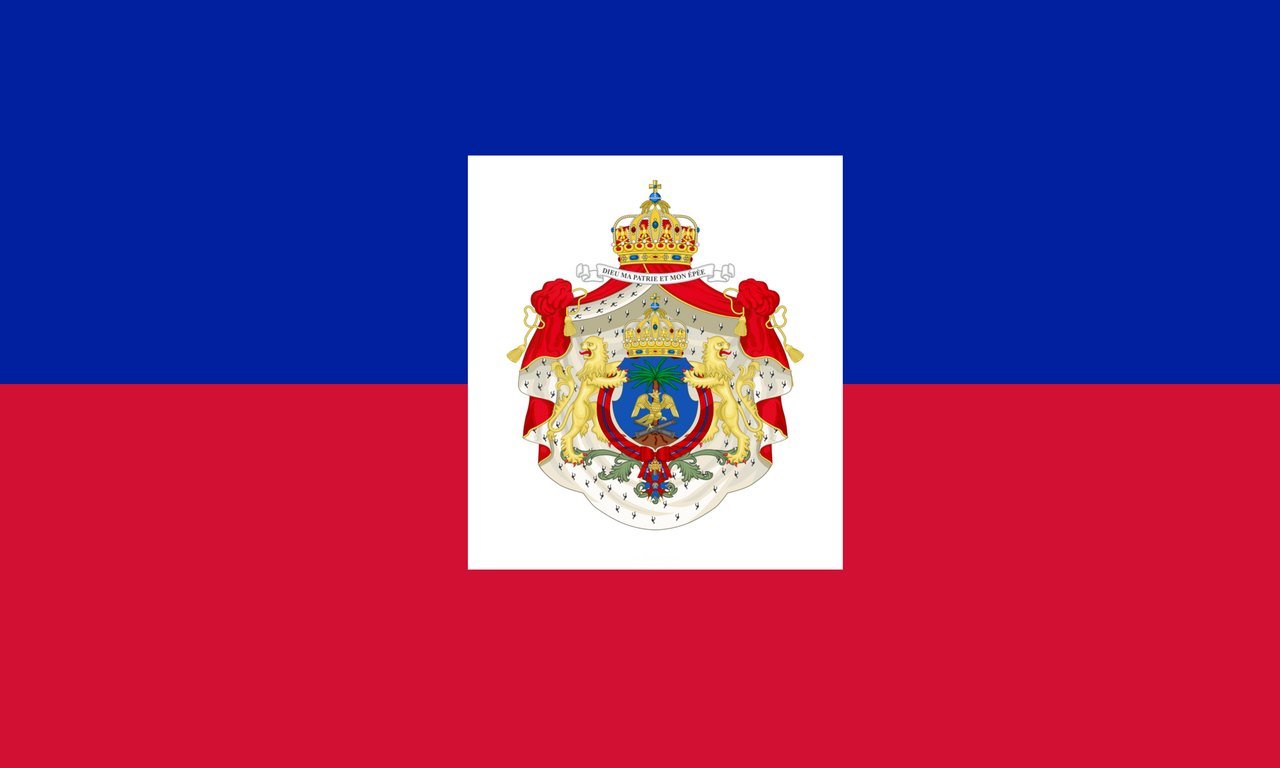
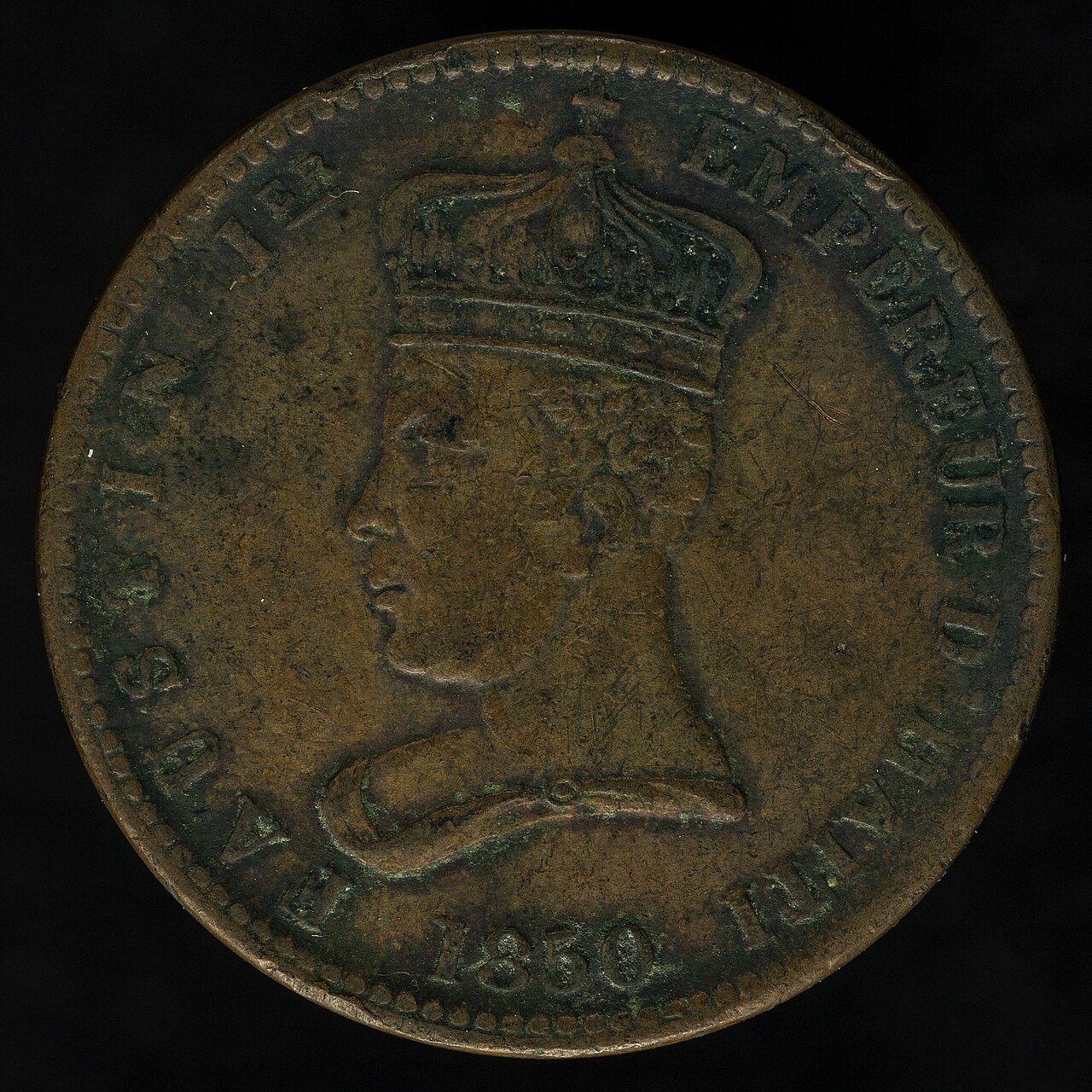
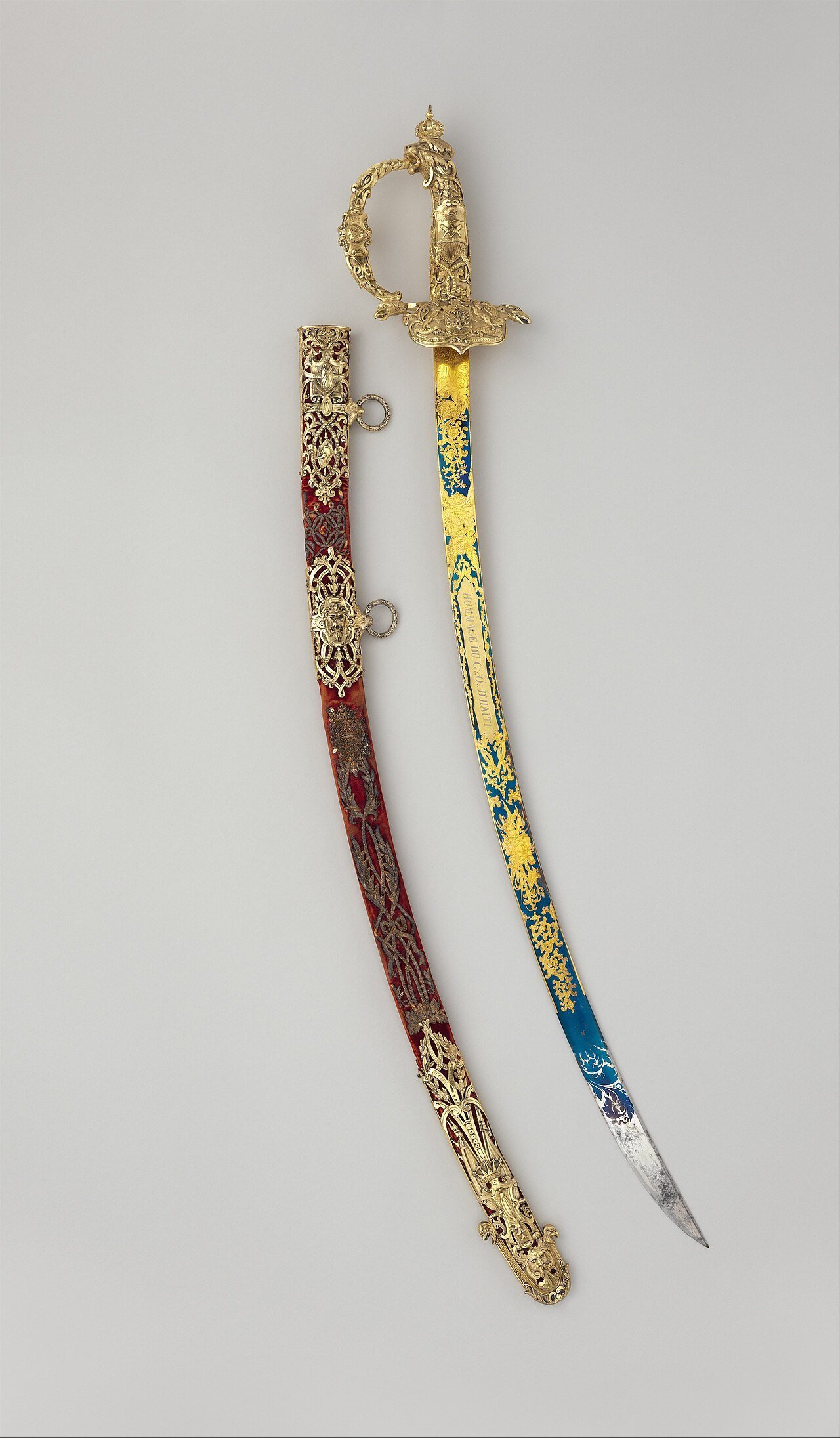
The imperial constitution of September 20, 1849, made the throne hereditary and placed real power in the emperor's hands. The empire adopted its own flag and coat of arms, and coins were struck bearing the crowned profile of Faustin I.
Chapter 5 · April 18, 1852
The coronation
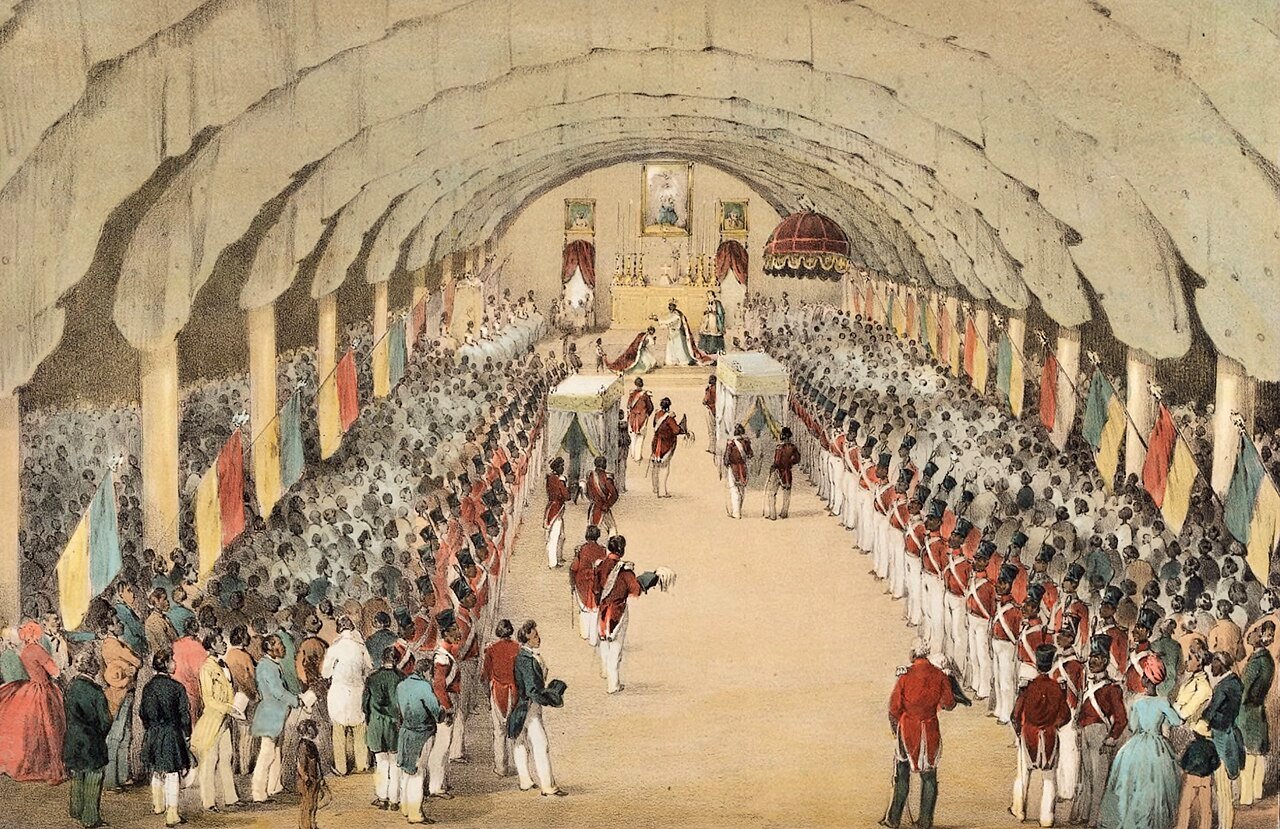
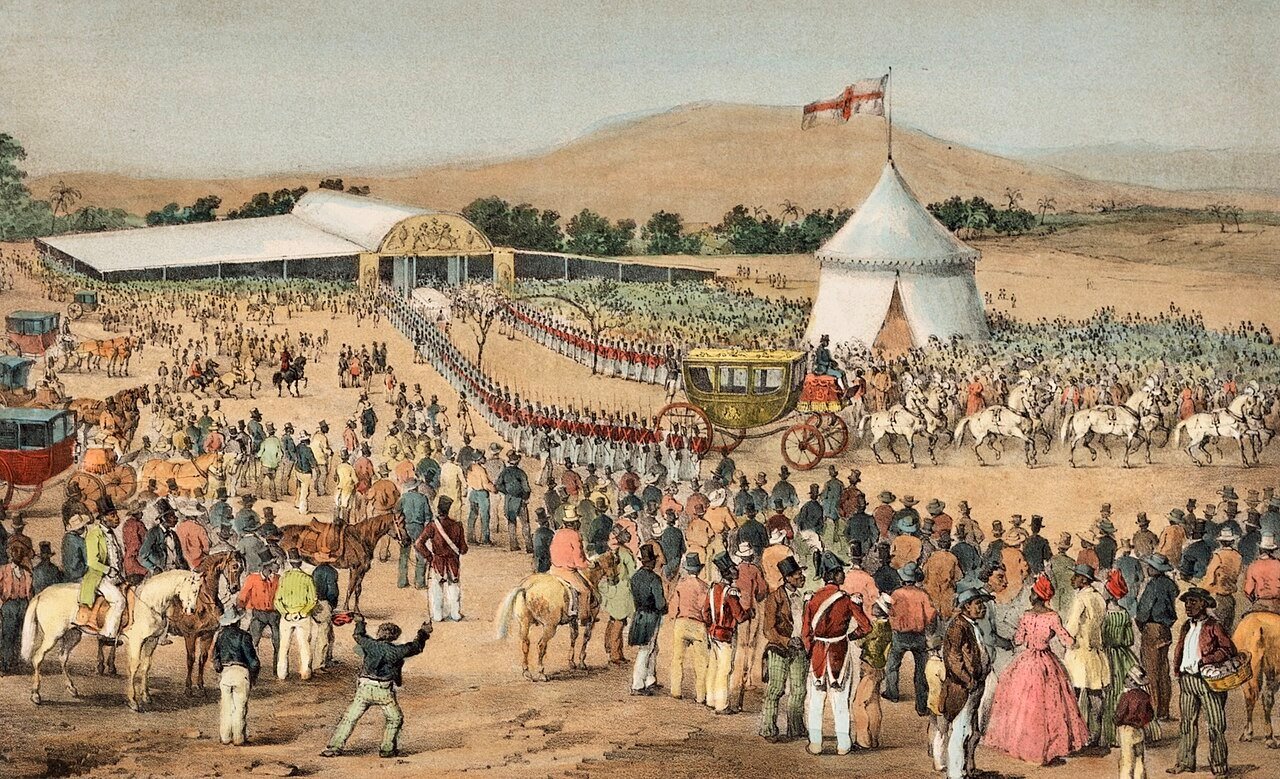
The formal coronation took place in Port-au-Prince on April 18, 1852, in a vast hall built for the occasion. The ceremony was modelled on European imperial courts: a crown, an imperial mantle, a throne and a procession of carriages, guards and new nobles.
According to the British diplomat Spenser St John, the emperor paid about £2,000 for his crown and some £30,000 for the other regalia. Supporters saw a proud statement that a Black nation could stage the same majesty as Europe's courts. Critics saw a fortune spent while ordinary Haitians struggled.
Chapter 6 · The imperial court
Princes, dukes, counts and barons
Faustin I created a full hereditary nobility. The first letters patent were issued on December 21, 1850. A list printed in 1859 counted 4 princes, 59 dukes, 2 marchionesses, 90 counts, 250 barons and 30 knights; other sources give different totals, but the court numbered in the hundreds.
Many titles were named after Haitian towns and places, so that generals became dukes of their home regions. The emperor also founded orders of chivalry: the Military Order of Saint Faustin and the Haitian Legion of Honour in 1849, then the Orders of Saint Mary Magdalene and Saint Anne and an Imperial Academy of Arts in 1856.
Chapter 7 · The imperial family
Empress Adélina and Princess Olive
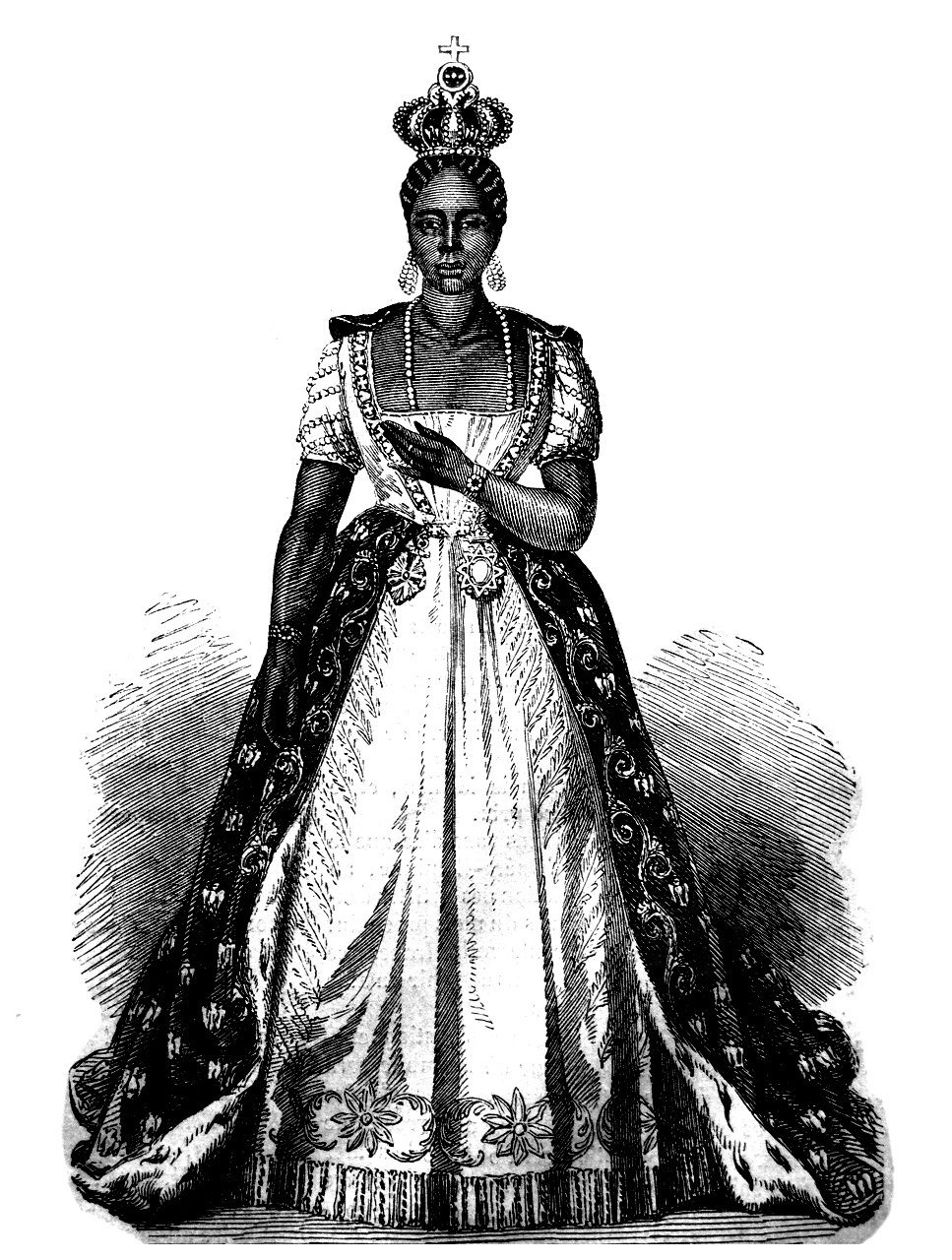
Soulouque married Adélina Lévêque, who became Empress of Haiti and shared the coronation of 1852. Their daughter Olive, born in 1842 and known at court as Madame Première, carried the title of Imperial Princess; the emperor also had a second daughter, Célita.
Princess Olive later married her cousin Pierre-Joseph Théodore de Vil-Lubin. Members of the imperial family followed the emperor into exile in 1859 and came home with him in 1867.
Chapter 8 · The entourage
Ministers, generals and enforcers
Power ran through a small circle of loyal ministers and generals. Louis Dufresne handled war, the navy and foreign relations; Jean-Baptiste Francisque handled justice, worship and public education; and Lysius Salomon, who would be president of Haiti from 1879 to 1888, served as minister of finance, commerce and foreign relations.
Among the generals was Fabre Nicolas Geffrard, whom the emperor made Duke of Tabara and who would one day overthrow him. Beside the official army stood the Zinglins, a militia tied to intimidation and violence against the regime's opponents.
Chapter 9 · 1849–1856
The wars with the Dominican Republic
The eastern part of the island had declared its independence from Haiti in 1844, ending the unification of Hispaniola that began in 1822. Soulouque feared that France, Spain or another power would use it as a base against Haiti, and he tried three times to bring it back.
The invasion of 1849 was turned back near Ocoa. A second attempt in 1850 was stopped by pressure from Britain, France and the United States. In 1855, he marched east with about 30,000 men, but Dominican forces under Pedro Santana defeated his army at Santomé, Cambronal and Sabana Larga. The defeats drained the treasury and badly hurt the emperor's prestige.

Chapter 10 · Haiti under the empire
Sovereignty, faith and a nation under strain
Soulouque defended Haiti's independence against foreign pressure, including a dispute with the United States over the island of Navassa. Haiti also invited free people of color from Louisiana to settle there, and in 1859 at least 350 made the journey.
He was also known for a comparatively open attitude toward Vodou, long scorned by much of the elite and by foreign visitors. Yet the costs of the court and the wars weighed on a poor, rural country, and fear of the regime silenced open debate.
Chapter 11 · 1858–1867
Fall, exile and return
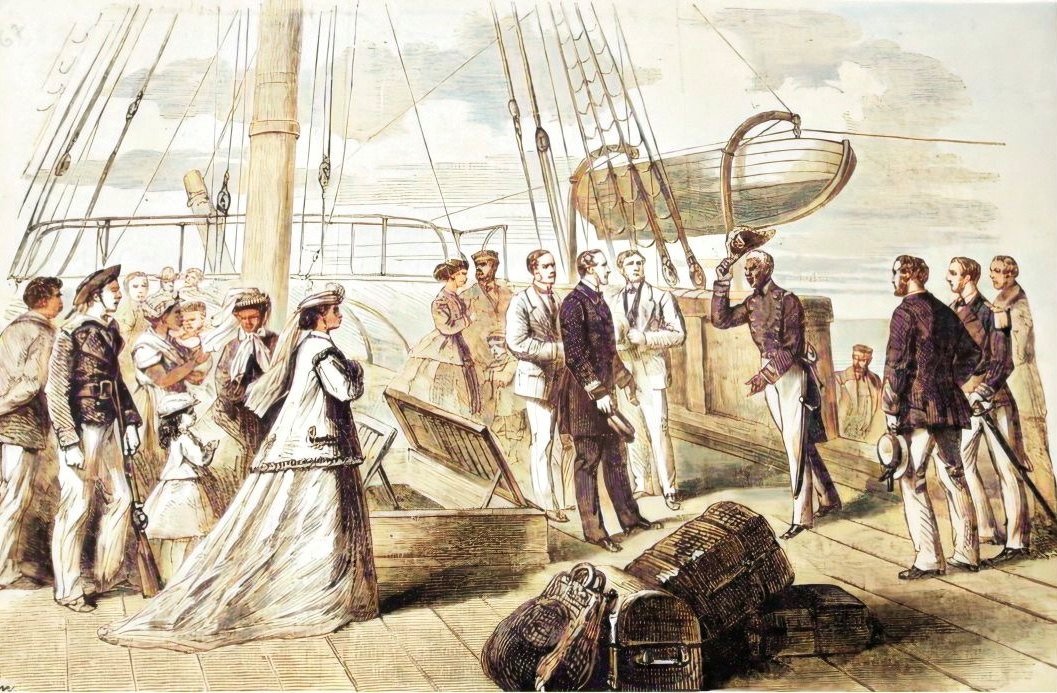
In December 1858, General Fabre Nicolas Geffrard left Port-au-Prince and raised the standard of revolt in Gonaïves. A committee there declared the empire abolished and named Geffrard president. As the revolt spread, support for the emperor collapsed.
On January 15, 1859, Faustin I abdicated. A week later he sailed into exile aboard a British warship, first to Kingston, Jamaica. When Sylvain Salnave came to power in 1867, the former emperor was allowed to return. He died in Petit-Goâve, the town of his birth, in August 1867; sources give the 3rd or the 6th as the date.
Chapter 12 · Memory
Caricature and the real man
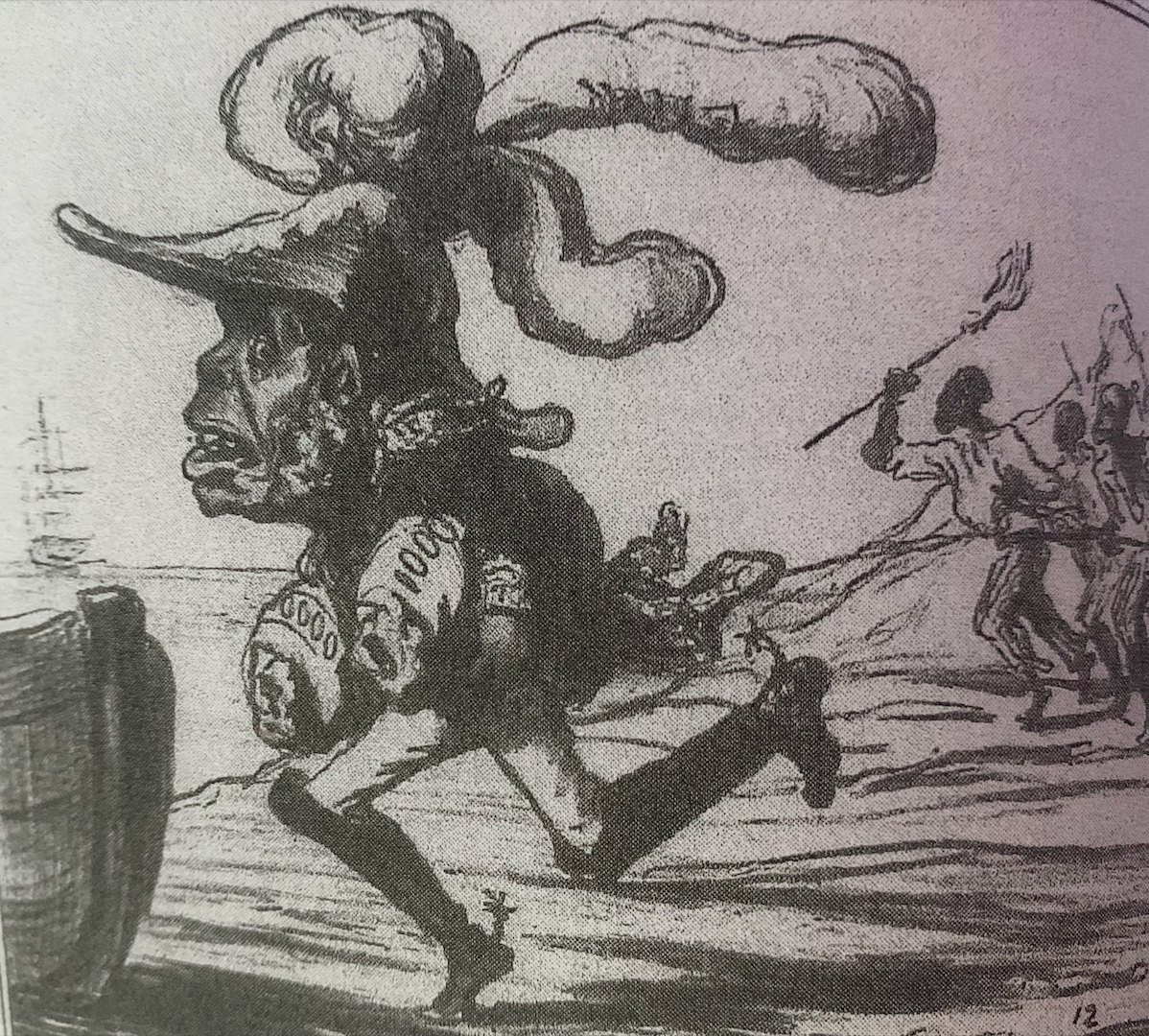
In France, Soulouque became a figure of ridicule. Cartoonists such as Honoré Daumier drew him with racist exaggeration, and critics of Napoleon III mocked the French emperor by comparing him to the Haitian one. Those images say more about European prejudice than about Haiti.
The historian Murdo J. MacLeod described him instead as a man of high intelligence and a realist, a superb if ruthless politician and diplomat. A fair memory holds both truths: his remarkable rise and the real suffering his rule caused.
Timeline of Faustin Soulouque
- 1782
Born in Petit-Goâve
Faustin-Élie Soulouque is born enslaved on August 15 in Saint-Domingue.
- 1793
Freedom
The emancipation decree frees the enslaved people of Saint-Domingue.
- 1804
Independence
After serving in the war of independence, he becomes a citizen of free Haiti.
- 1806
Lieutenant
He becomes aide-de-camp to General Lamarre.
- 1810
Horse guard
He joins the horse guard of President Alexandre Pétion.
- 1847
President of Haiti
The Senate chooses him on March 1 after the death of President Riché.
- 1848
Repression
Political violence in Port-au-Prince in April; the Zinglins enforce his rule.
- 1849
Emperor Faustin I
Proclaimed emperor on August 26; the imperial constitution follows on September 20.
- 1850
A new nobility
The first letters patent of the imperial nobility are issued on December 21.
- 1852
Coronation
Faustin I and Empress Adélina are crowned in Port-au-Prince on April 18.
- 1855
War in the east
A last campaign against the Dominican Republic ends in defeat in early 1856.
- 1858
Geffrard's revolt
General Fabre Nicolas Geffrard rises against the emperor in Gonaïves in December.
- 1859
Abdication
Faustin I abdicates on January 15 and sails into exile in Jamaica.
- 1867
Home to die
Allowed to return, he dies in Petit-Goâve in August.
Le Soulouquois · Vwa Ayiti
Read the full story of Emperor Faustin I
Our editorial board's article, in English, French and Kreyòl, on the life, the empire and the legacy of Haiti's last monarch.
Sources and image credits
- Wikipedia: Faustin Soulouque
- Wikipédia : Faustin Ier
- The Metropolitan Museum of Art: Sword with Scabbard of Faustin I
- Wikimedia Commons: Faustin Soulouque
Historical images come from Wikimedia Commons and are in the public domain or released under CC0, except the imperial flag (CC BY-SA 3.0, Jaume Ollé). The portrait and the illustrated timeline at the top of this page were made with AI for Le Soulouquois and are artistic interpretations. Some dates differ between historical sources; where they do, we say so.